Common Window Problems in Broward County Homes
By Windows Repair of Broward · 2026-02-10 · 8 min read
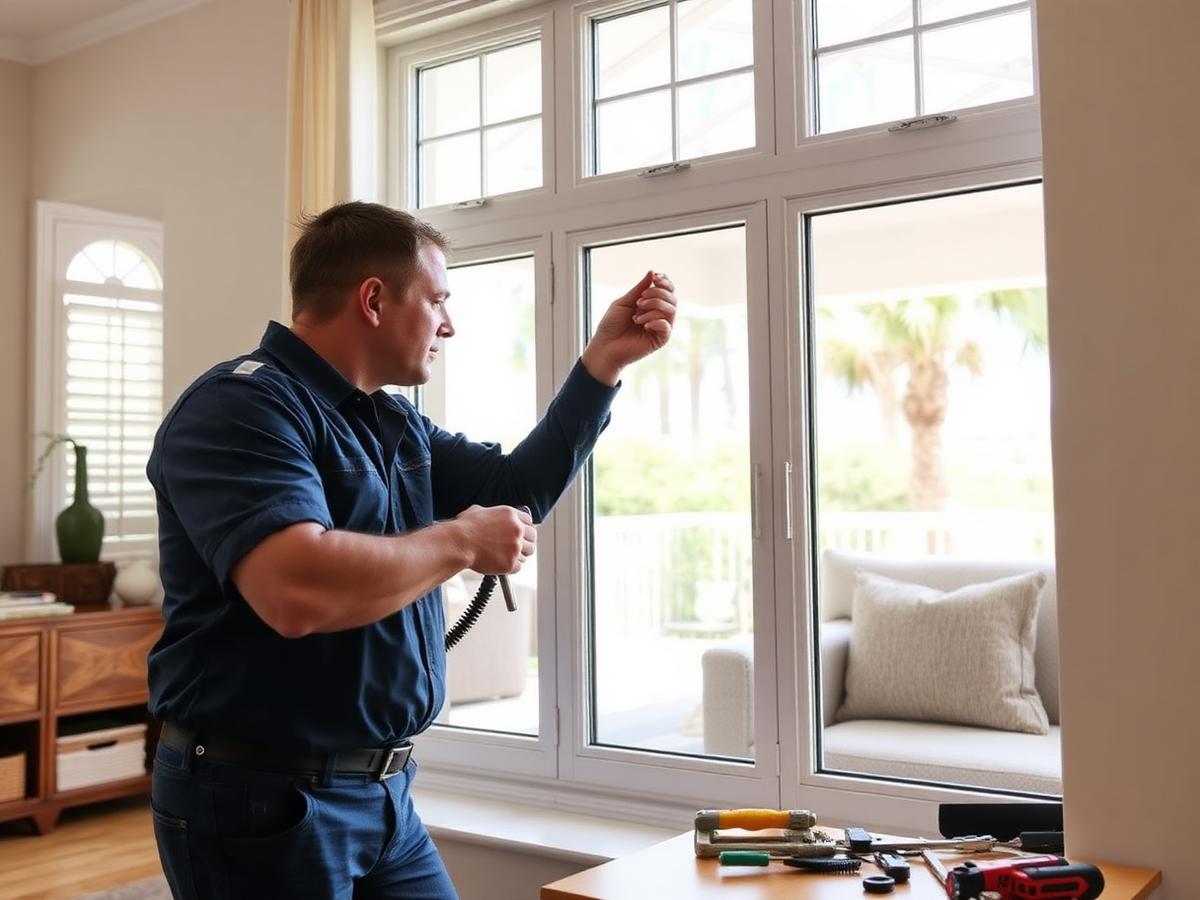
Windows in Broward County live a harder life than windows almost anywhere else in the United States. They face year-round heat, sustained humidity, salt-influenced air that reaches far inland along the canal system, intense ultraviolet exposure and a rainy season that delivers water horizontally rather than vertically. Components that would last twenty-five years in a temperate climate can be finished here in ten.
The practical result is that most Broward homeowners will deal with at least one window problem within a few years of moving in. The good news is that the great majority of those problems are repairs, not replacements. Below are the failures we see most frequently, what causes each one, and how they are normally resolved.
The Sash That Will Not Stay Open
This is the single most common call we receive. You lift a single-hung or double-hung window, let go, and it slides straight back down. Sometimes it drops slowly over a minute; sometimes it slams.
The cause is the window balance — a spring-loaded counterweight hidden in the jamb that carries the weight of the sash. Balances are mechanical devices under permanent load, and in a humid environment their springs, shoes and clips corrode. Once the balance loses tension, the sash weighs what it actually weighs, which on a glass-and-aluminum panel is considerable.
Why it matters beyond convenience
A sash that can drop without warning is a genuine hazard around children and pets, and propping it with a stick or a bottle is not a solution. It is also a security issue, because a window that cannot be held open properly usually cannot be closed and latched properly either.
How it is fixed
The sash is removed, the balance type is identified, and matched replacements are installed — always in pairs, because the second balance is the same age and will fail soon after the first. It is a targeted repair that leaves the frame and glass untouched.
Sliding Windows That Stick, Scrape or Jump the Track
Horizontal sliders are everywhere in Broward, and they fail in a predictable sequence. First the window gets slightly harder to open. Then it needs two hands. Then it scrapes. Eventually it either refuses to move or lifts out of the track entirely.
The underlying cause is almost always the same: abrasive material in the bottom track. Beach sand, construction dust and fine soil from landscaping collect in the channel, and every pass of the sash grinds that grit into the roller wheels until they are flat or seized. Once the rollers stop turning, the sash is being dragged rather than rolled, and it starts cutting a groove into the track itself.
- Rollers wear flat or seize from grit and corrosion
- The dragging sash grooves the track running surface
- The sash sits low, so the lock no longer lines up with the keeper
- Weep holes clog, so rainwater backs up and overflows indoors
The repair involves removing the sash, replacing the rollers as a set, cleaning the track thoroughly, and either restoring or capping the running surface so the new wheels have something smooth to run on.
Foggy Glass Between the Panes
If a window looks hazy and no amount of cleaning helps, the moisture is inside a sealed insulated glass unit. Two panes of glass are bonded to a spacer at the factory with a dry cavity between them. When that perimeter seal fails, humid outdoor air enters and condenses on surfaces nobody can reach.
South Florida accelerates this. The outer pane bakes in the sun while the inner pane sits against conditioned air, driving constant expansion and contraction of the seal, and the ambient humidity means any breach admits very wet air. Units on west and south elevations usually fail first.
Fogged units cannot be cleaned or restored. The sealed glass unit is replaced, generally without touching the frame, sash or hardware.
Locks That No Longer Catch
A window lock does more than secure the opening. It compresses the sash against the weatherstrip, which is what actually seals the window against air and rain. When a latch stops engaging, the window leaks even when it looks shut.
Interestingly, the hardware itself is intact more often than not. What has usually changed is geometry: a sash that has dropped a few millimetres on worn rollers or failed balances, a frame that has racked slightly, or a keeper whose screws have worked loose. Replacing the latch in that situation produces a brand-new part that still does not catch, which is why alignment gets checked first.
Water Coming In Around the Window
During the rainy season we get a steady stream of calls about water appearing at interior sills. The instinct is to blame the glass, but glass rarely leaks. The three usual culprits are blocked weep holes, failed perimeter sealant and open frame corners.
Blocked weep holes
Sliding window tracks are designed as gutters. Rain that gets past the outer sash collects in the track and drains out through small openings at the exterior face. Block those with sand, paint or mulch and the track becomes a reservoir that overflows inward. Clearing them is one of the cheapest preventive repairs available.
Failed perimeter sealant
The joint between the window frame and the wall is sealed with a flexible material that hardens, shrinks and cracks under years of UV exposure. Once it splits, wind-driven rain travels straight into the wall cavity. The fix is cutting out the old sealant entirely rather than layering new material over it.
Torn and Sagging Screens
Screens matter more here than in most places, because they are the difference between using the breeze in February and keeping the windows shut. Sun degrades the spline that holds the mesh, so screens sag and eventually pull free. Pets, pressure washing and branches do the rest.
Most screens can be rescreened rather than replaced. If the frame is straight and the corners are sound, the old mesh and spline come out and new mesh goes in under even tension. Households near canals or mangroves usually benefit from a tighter no-see-um weave, since standard mesh does not stop the smallest biting insects.
Corroded Frames and Hardware
Salt-laden air reaches much further inland than people expect, following the canal network across the county. On aluminum frames it shows up as white powder and pitting; on hardware it shows up as latches that seize and rollers that stop turning.
Surface corrosion is repairable: the affected area is cleaned back to sound material, treated and resealed. Corrosion that has eaten through the extrusion is not, and that is one of the few situations where we recommend replacing a unit rather than repairing it.
What Broward Homeowners Can Actually Do
A short maintenance routine prevents a surprising share of the failures above:
- Vacuum sliding tracks several times a year, more often near the beach or during nearby construction
- Check that weep holes at the exterior face of the track are open and draining
- Rinse salt off exterior hardware on coastal properties
- Operate and lock every window at least twice a year so problems are found early
- Inspect perimeter sealant for cracks before the rainy season, not during it
- Avoid oily lubricants in tracks — they hold dust against the rollers
When something does fail, it is worth having the whole house looked at rather than just the one window. Components age at the same rate across a property, so a failed balance in one bedroom usually means the others are close behind.
Frequently Asked Questions
- What is the most common window problem in South Florida homes?
- Failed window balances — sashes that will not stay open — followed closely by worn rollers in sliding windows.
- Can most window problems be repaired instead of replaced?
- Yes. When the frame and glass are sound, the failed components are usually serviceable and replacing them costs far less than a new unit.
- Why do windows fail faster in Broward County?
- Heat, humidity, salt-influenced air and intense UV exposure all accelerate wear on springs, seals, weatherstrip and hardware.
- How often should windows be maintained here?
- Clean tracks and check drainage a few times a year, and operate and lock every window at least twice a year to catch problems early.
More Window Repair Articles
- Foggy Windows: Causes and Repair Options
- How to Identify a Broken Window Balance
- How Florida Heat and Humidity Affect Window Components
- Browse all window repair services
Need a window repaired in Broward County?
Tell us what the window is doing and we will tell you what it needs. Free estimates for residential and commercial properties.