How Florida Heat and Humidity Affect Window Components
By Windows Repair of Broward · 2026-03-23 · 8 min read
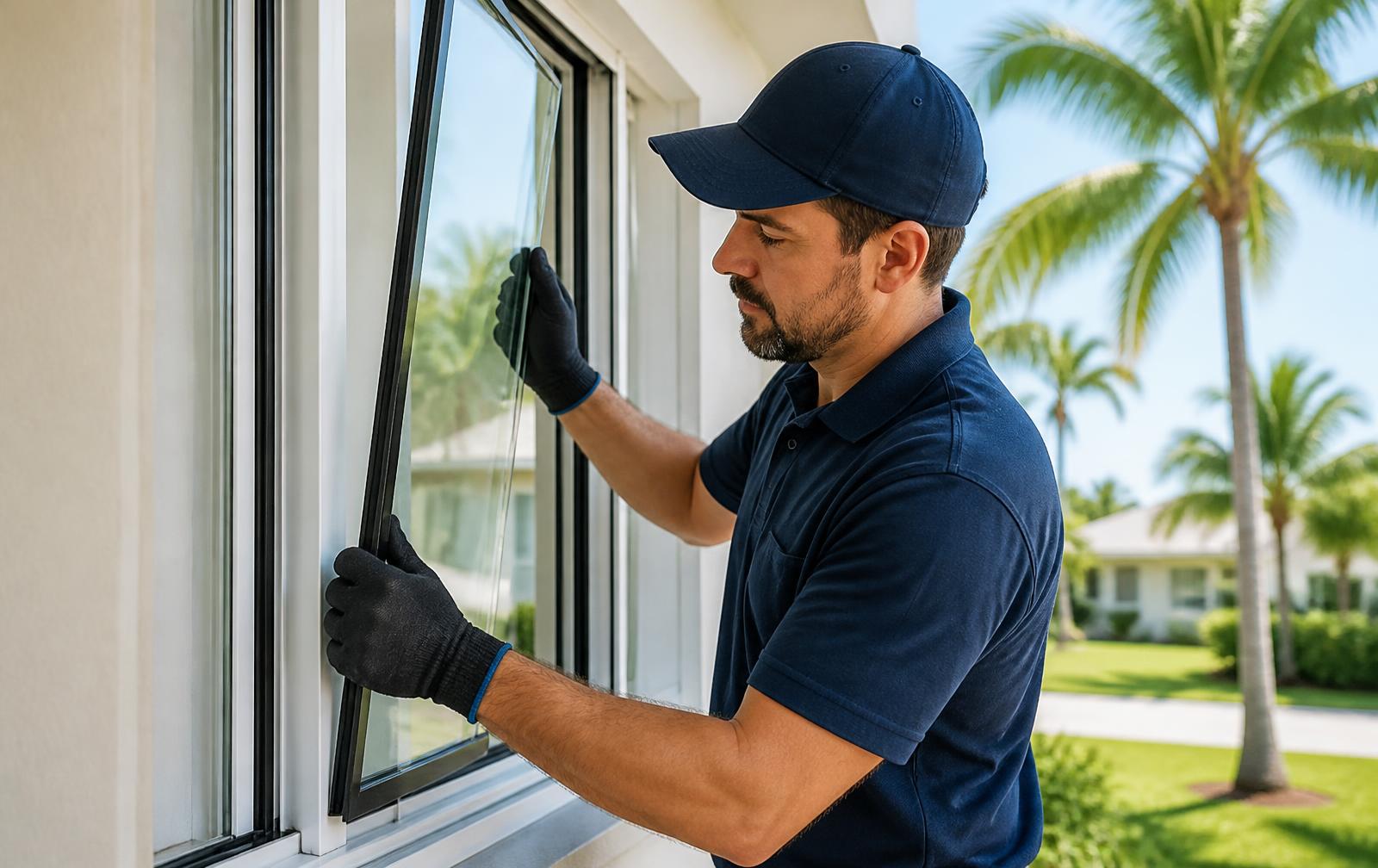
Window manufacturers publish service life expectations based on average conditions. South Florida is not average. A window in Broward County faces roughly nine months of intense solar load, year-round humidity above what most of the country sees in its wettest month, salt-influenced air that travels well inland, and a rainy season that delivers water sideways.
The result is that components do not fail randomly here — they fail in a predictable order, driven by which environmental factor attacks them hardest. Knowing that order makes maintenance far more effective.
Heat and Thermal Cycling
The most underestimated force acting on a window is daily expansion and contraction. An aluminum frame on a west elevation can swing forty degrees between a conditioned interior and an afternoon exterior surface temperature, and it does that every single day for decades.
What thermal cycling attacks
- Insulated glass seals, which flex at the spacer until the bond fails
- Perimeter sealant joints, which are pulled and compressed continuously
- Frame corner joints, which open as sections move at different rates
- Existing cracks in glass, which propagate a little further with each cycle
This is why a small crack in a pane rarely stays small in Florida, and why fogged insulated units cluster on the sunniest elevations of a house rather than appearing evenly.
Ultraviolet Exposure
UV radiation breaks down polymers. Anything soft, flexible or plastic in a window assembly is on a countdown from the day it is installed.
Weatherstrip hardens and loses its ability to compress, so windows that used to seal begin to whistle and leak. Screen spline shrinks and stiffens, releasing mesh tension and letting screens sag out of their frames. Plastic latch bodies, tilt clips and screen fittings become brittle enough to snap under ordinary thumb pressure. Glazing gaskets crack and let water reach places it was never meant to go.
None of these are dramatic failures. They accumulate quietly, and homeowners often attribute the resulting drafts and noise to the window being old rather than to a handful of replaceable parts.
Humidity and Corrosion
Sustained humidity keeps metal surfaces damp for long periods, and dampness plus dissimilar metals plus salt is the recipe for corrosion. Inside a window, the vulnerable parts are the ones nobody sees.
Balances
Balance springs, shoes and mounting clips corrode inside the jamb. Increased friction accelerates spring fatigue, so the balance loses tension faster than the mechanism itself wears out.
Rollers and hinges
Roller bearings seize rather than wear. A seized roller stops rolling and starts dragging, which then destroys the track. Casement hinges corrode in the exterior air path, increasing sash load until the crank operator strips.
Locks
Latch mechanisms stiffen and eventually seize in one position. On coastal properties this is often the first hardware failure a homeowner notices.
Salt Air and Distance From the Water
Salt accelerates every corrosion process, and in Broward County it reaches much further inland than most people assume because the canal network carries it. The practical gradient looks roughly like this: oceanfront and barrier-island properties see the fastest hardware degradation, canal-front and Intracoastal properties are close behind, and homes several miles west still see measurable salt influence but at a slower rate.
This is why a hardware choice that is fine in Weston is a poor choice in Lauderdale-by-the-Sea, and why coastal properties benefit from an annual rinse of exterior hardware more than any other single maintenance step.
Rain, Wind and Drainage
South Florida rain arrives fast and often horizontally. Windows are designed for that — sliding tracks act as gutters and drain through weep holes at the exterior face — but the system only works if the path stays clear.
Sand, landscaping debris, paint and mulch block weep holes, and once the track cannot drain, it fills and overflows inward. That water then sits against the frame, which accelerates the corrosion described above and can damage drywall, trim and flooring below the sill.
Sand, Dust and Abrasion
Wind-carried beach sand, construction dust and soil from landscaping collect in the bottom track of every sliding window. Each pass of the sash grinds that grit into the roller wheels. Abrasion is mechanical rather than chemical, but in a coastal county it does as much damage as corrosion.
A Realistic Maintenance Calendar
Matching maintenance to the failure mechanisms above is more useful than a generic checklist:
- Quarterly: vacuum sliding tracks and confirm weep holes drain
- Twice a year: operate and lock every window, noting anything stiff or loose
- Annually, before the rainy season: inspect perimeter sealant for cracks and gaps
- Annually, coastal properties: rinse exterior hardware to remove salt deposits
- Annually: check screen tension and spline condition
- Before storm season: verify every window latches fully, especially impact units
None of this stops the climate. It does mean that when a component reaches the end of its life, it is replaced on your schedule rather than during the first serious storm of the season.
Frequently Asked Questions
- Why do windows fail faster in South Florida?
- Thermal cycling, UV exposure, sustained humidity, salt-influenced air and abrasive sand all attack different components at the same time.
- Which window component fails first in this climate?
- It varies by location, but weatherstrip, screen spline and hardware such as balances and rollers usually go before glass or frames.
- Does living inland mean salt is not a problem?
- It is reduced, not eliminated. The canal network carries salt-influenced air well inland across Broward County.
- What is the single most useful maintenance step?
- Keeping sliding tracks clean and weep holes draining, followed by rinsing exterior hardware on coastal properties.
More Window Repair Articles
- Foggy Windows: Causes and Repair Options
- How to Identify a Broken Window Balance
- Why Is My Window Difficult to Open and Close?
- Browse all window repair services
Need a window repaired in Broward County?
Tell us what the window is doing and we will tell you what it needs. Free estimates for residential and commercial properties.