Why Is My Window Difficult to Open and Close?
By Windows Repair of Broward · 2026-03-09 · 8 min read
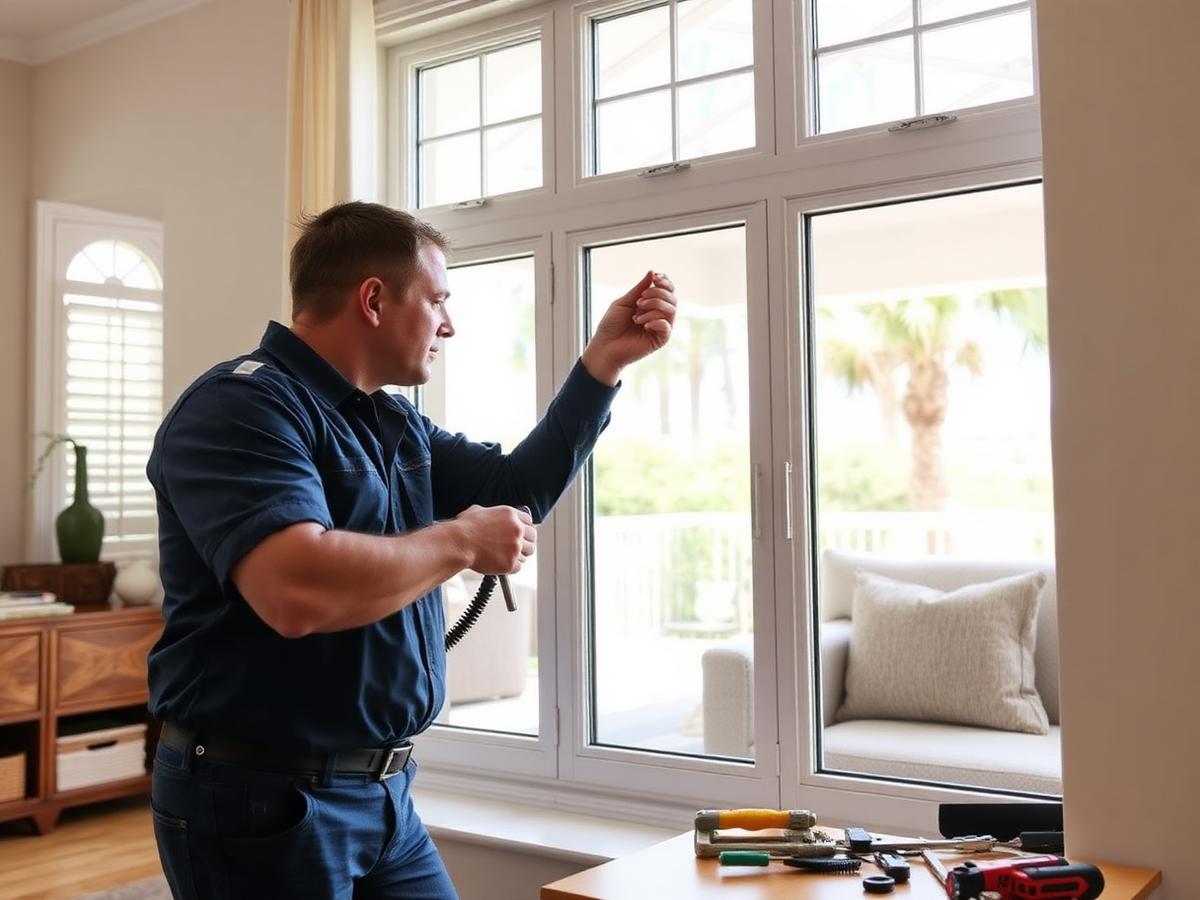
Windows are supposed to move with one hand. When one starts needing a shove, a lift and a bit of language, something specific has changed — and it is worth identifying what, because forcing a stiff window is how sashes get bent and glass gets cracked.
The causes fall into a small number of categories, and each has a distinctive feel. This guide walks through them in the order we check them on site.
Start With the Window Type
Different window styles fail in different ways, so the first step is knowing what you have.
- Single-hung: bottom sash moves vertically, top panel is fixed
- Double-hung: both sashes move vertically
- Horizontal slider: one or both sashes move sideways on rollers
- Casement: sash swings outward on side hinges, driven by a crank
- Awning: sash hinges at the top and swings out, also crank-driven
Hung windows depend on balances. Sliders depend on rollers and tracks. Casements and awnings depend on operators and hinges. Where you look next depends on which of these you are dealing with.
The Simplest Cause: Debris in the Channel
Before anything else, look in the track or channel. In Broward County, tracks fill with sand, construction dust, leaf litter and general grit at a remarkable rate. Compacted debris raises the running surface, forces the sash upward, and adds friction along the entire travel.
Vacuum the track thoroughly, including the corners, and wipe the channel out. If the window moves noticeably better afterwards, debris was at least part of the problem — and the grit was also quietly grinding your rollers down while it sat there.
What not to do
Avoid oily lubricants and general-purpose penetrating sprays in a window track. They feel like an improvement for a week, then they collect dust and form an abrasive paste that accelerates wear. A dry lubricant is the right choice if one is needed at all.
Sliding Windows: Worn or Seized Rollers
If a horizontal slider is stiff and cleaning the track did not help, the rollers are the prime suspect. Listen and feel as you move the sash.
- A scraping or grinding sound means the sash is contacting the track directly
- Resistance in one direction only suggests uneven wear between rollers
- A sash that sits visibly crooked means one roller has collapsed
- A window that lifts out of the track has rollers low enough to disengage
Rollers are inexpensive, serviceable parts. They are replaced as a set per sash, and the track is cleaned or repaired at the same time so the new wheels have a smooth surface to run on.
Sliding Windows: A Damaged Track
Run a finger along the rail with the sash removed or pushed aside. A groove worn into the running surface, a bent section, or corrosion roughness will all bind rollers. Bent rails can often be straightened, and worn ones can be capped with a smooth surface rather than replacing the whole window.
Hung Windows: Balance Problems
In single-hung and double-hung windows, the balance is doing the lifting. Balance faults present in two opposite ways, which confuses people.
Too little tension
The sash is easy to lift but will not stay up. It drifts or drops. The balance has lost its spring.
Too much friction
The sash is very hard to lift and feels like it is fighting you. A corroded or seized balance, or a distorted jamb liner, is adding resistance the system was never designed for.
In both cases the answer is replacing the balances in matched pairs, sized to the actual sash weight and travel rather than to whatever looks similar.
Casement and Awning Windows: Operators and Hinges
A stiff crank is one of the most misdiagnosed window problems. People replace the operator, and the new one strips within months, because the operator was never the problem.
The correct test is to disconnect the operator arm and swing the sash by hand. If the sash is heavy or binding on its own, the hinges are corroded, worn or fouled — and that is what has been overloading the gearbox. If the sash swings freely and only the crank is stiff, the operator itself has failed internally.
The Frame Has Moved
Sometimes nothing is wrong with the moving parts at all. A frame that has gone out of square narrows the opening on one side, and the sash grinds or refuses to travel the last few inches. Look at the gap between the sash and the frame along the full length — if it tapers noticeably, the geometry has changed.
Frame movement can come from settling, from corrosion distorting the section, or from anchors working loose. Correcting the frame is what fixes the operation; adjusting the sash to match a crooked frame is a temporary patch.
Paint, Sealant and Swelling
Do not overlook the obvious. Windows get painted shut with surprising frequency, particularly in rental properties and after exterior repainting. Sealant applied over a moving joint has the same effect. Both are visible on close inspection: a continuous paint or caulk line bridging the sash and the frame is the giveaway.
When to Stop and Call Someone
Cleaning the track is a reasonable DIY step. Beyond that, the risk of making things worse rises quickly. Stop and get help if:
- The sash has to be removed to reach the problem
- The window drops or slams when released
- The sash is visibly crooked or the frame gap is tapered
- The crank turns without moving the sash
- The window will not lock even when it appears closed
- There is any cracked glass involved
A stiff window is a small problem while it is still stiff. Forced repeatedly, it becomes a bent sash, a cracked pane or a window that cannot be secured at all.
Frequently Asked Questions
- Why has my window suddenly become hard to open?
- Most often debris in the track, worn rollers, a failed balance, or a frame that has shifted out of square.
- Should I lubricate my window tracks?
- Avoid oily sprays, which collect dust and create an abrasive paste. Cleaning the track is more effective, and a dry lubricant is the safer option if one is needed.
- Why is my casement window crank so stiff?
- Usually binding or corroded hinges overloading the operator. Replacing the crank without addressing the hinges leads to repeat failure.
- Can a window that is painted shut be freed without damage?
- Usually yes, with careful scoring of the paint line, but forcing it risks bending the sash or cracking the glass.
More Window Repair Articles
- Foggy Windows: Causes and Repair Options
- How to Identify a Broken Window Balance
- How Florida Heat and Humidity Affect Window Components
- Browse all window repair services
Need a window repaired in Broward County?
Tell us what the window is doing and we will tell you what it needs. Free estimates for residential and commercial properties.