How to Identify a Broken Window Balance
By Windows Repair of Broward · 2026-04-06 · 7 min read
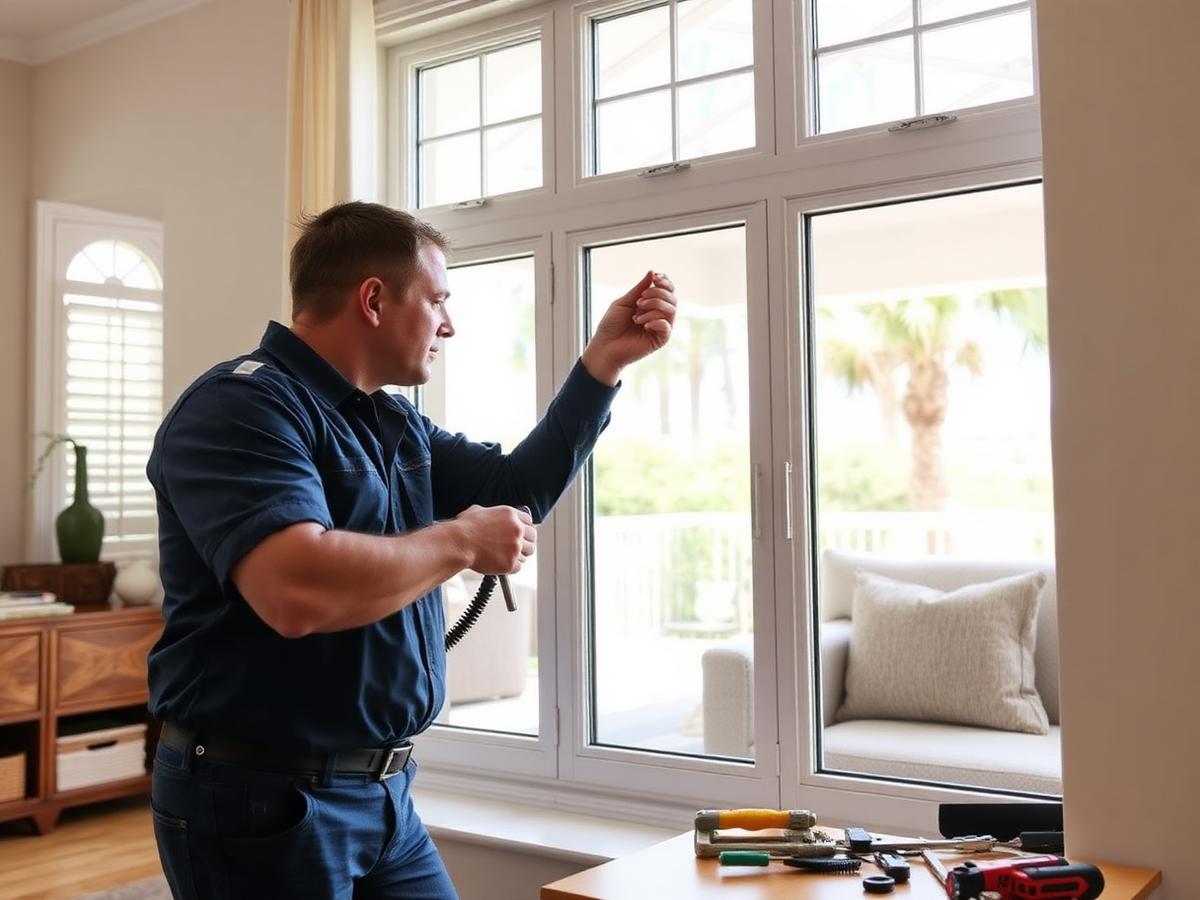
A window balance is the counterweight system hidden in the jamb of a single-hung or double-hung window. Its entire job is to offset the weight of the sash so that a heavy panel of glass and metal feels light in your hand and stays wherever you leave it. When it fails, the window becomes an inconvenience and, in some cases, a hazard.
Balance failure is one of the most common window faults in Broward County homes, and it is also one of the most straightforward to fix. The first step is confirming that the balance really is the culprit rather than a track, frame or hardware issue.
The Classic Signs of a Failed Balance
Balance problems produce a recognisable set of symptoms:
- The sash will not stay open and slides back down when released
- The window slams shut instead of drifting
- One side of the sash rises faster than the other, so it jams diagonally
- The sash is very hard to lift, as though it is fighting you
- A snapping, popping or grinding sound comes from inside the jamb
- The sash creeps down slowly over a minute or two
The first two are the most frequent. The last one is early-stage failure, and catching it then is easier than dealing with a sash that has dropped completely.
Three Simple Tests You Can Do
The hold test
Raise the sash about a third of the way and let go. A healthy balance holds it indefinitely. If it drops immediately, the balance has failed. If it creeps down over a minute, it is losing tension.
The level test
Raise the sash slowly and watch both sides. If one corner leads and the sash goes out of level, one balance has failed while the other is still working. This is why balances are always replaced in pairs.
The effort test
Note how much force the window needs. A window that requires real effort but does hold position usually has a seized or over-tensioned balance, or friction from a distorted jamb liner.
When It Is Not the Balance
Several other faults imitate balance failure, so rule these out:
- Debris packed in the channel, which adds friction along the whole travel
- A frame that has gone out of square, which pinches the sash at one height
- Paint or sealant bridging the sash and frame, which sticks then releases suddenly
- A sliding window, which has no balances at all — that is a roller or track issue
The distinguishing feature of a balance fault is that it affects the holding of the sash, not just the sliding of it. If the window moves smoothly but will not stay where you put it, it is the balance.
The Main Balance Types
Identifying the type matters because replacements are not interchangeable.
Spiral balances
A twisted rod inside a tube, common in aluminum single-hung windows. When the spring lets go, you often hear a distinct snap.
Block-and-tackle balances
A pulley-and-cord assembly inside a channel, common in vinyl double-hung windows. Failure usually shows as a cord that has broken or a sash that will not reseat after tilting.
Constant-force balances
A coiled stainless strip that unrolls as the sash rises. These tend to fail gradually, with the sash drifting further each month.
Why Balances Fail Here
A balance is a spring under permanent load, mounted in a channel that stays humid. Corrosion at the spring, shoe or clip raises friction, and higher friction accelerates fatigue. Windows that get opened daily for cross-ventilation cycle far more than average, so the most-used windows in a house are usually the first to go. Because both balances on a sash are the same age and have done the same work, the second usually follows the first within a year.
Why This Is Not a Good DIY Job
Balances are under spring tension, and releasing one incorrectly can cause an injury. The sash has to come out of the frame, which on a large window is a two-person lift with glass involved. Replacements have to be matched to sash weight and travel, not just to appearance — an under-sized balance will not hold, and an over-sized one makes the window hard to lower.
The repair itself is quick for someone who does it routinely: remove the sash, identify the balance, install matched replacements in pairs, reinstall and test at several heights.
What to Do Until It Is Repaired
Do not prop the sash with a stick, a bottle or a block of wood. It hides a real hazard, and if the prop slips the sash falls with the full weight of the glass. Keep the window closed and latched until it can be repaired, particularly in rooms used by children. If the window is a designated emergency exit, treat the repair as a priority rather than a convenience item.
Frequently Asked Questions
- How do I know if my window balance is broken?
- Raise the sash and release it. If it drops or drifts down instead of holding position, the balance has failed.
- Do both balances need replacing?
- Yes. They are the same age and have done the same work, so pairing a new balance with an old one leads to uneven tension and early failure.
- Can a balance be repaired rather than replaced?
- Balances are sealed spring assemblies and are replaced rather than rebuilt.
- Do sliding windows have balances?
- No. Horizontal sliders run on rollers and tracks, so a sticking slider is a roller or track problem.
More Window Repair Articles
- Foggy Windows: Causes and Repair Options
- How Florida Heat and Humidity Affect Window Components
- Why Is My Window Difficult to Open and Close?
- Browse all window repair services
Need a window repaired in Broward County?
Tell us what the window is doing and we will tell you what it needs. Free estimates for residential and commercial properties.